The Lost Buildings of Heaton
A grand hall, a windmill, and the picture palaces of Chillingham Road. A guide to the vanished and demolished buildings of Heaton, and the medieval ruin that survives.
Heaton wears its history quietly. A densely built suburb of Tyneside flats and terraces, it does not look like a place with a grand past, yet beneath the streets and within the parks lie the traces of a hall, a windmill, picture palaces and a medieval fortress. Here is our guide to the lost buildings of Heaton, and the one remarkable survivor.
Heaton Hall
The grandest of Heaton's losses was Heaton Hall, a country house built by the industrialist Richard Ridley in 1713. His grandson, Sir Matthew White Ridley, had the architect William Newton add corner towers and reface the front in stone, turning a plain brick house into a proper seat. The Ridleys left around 1840, and in 1879 the corporation bought part of the estate to lay out Heaton Park. The hall lingered on before being demolished between 1930 and 1942. It stood in the south-east corner of the park, near Shaftesbury Park, where nothing of it now remains.
King John's Palace
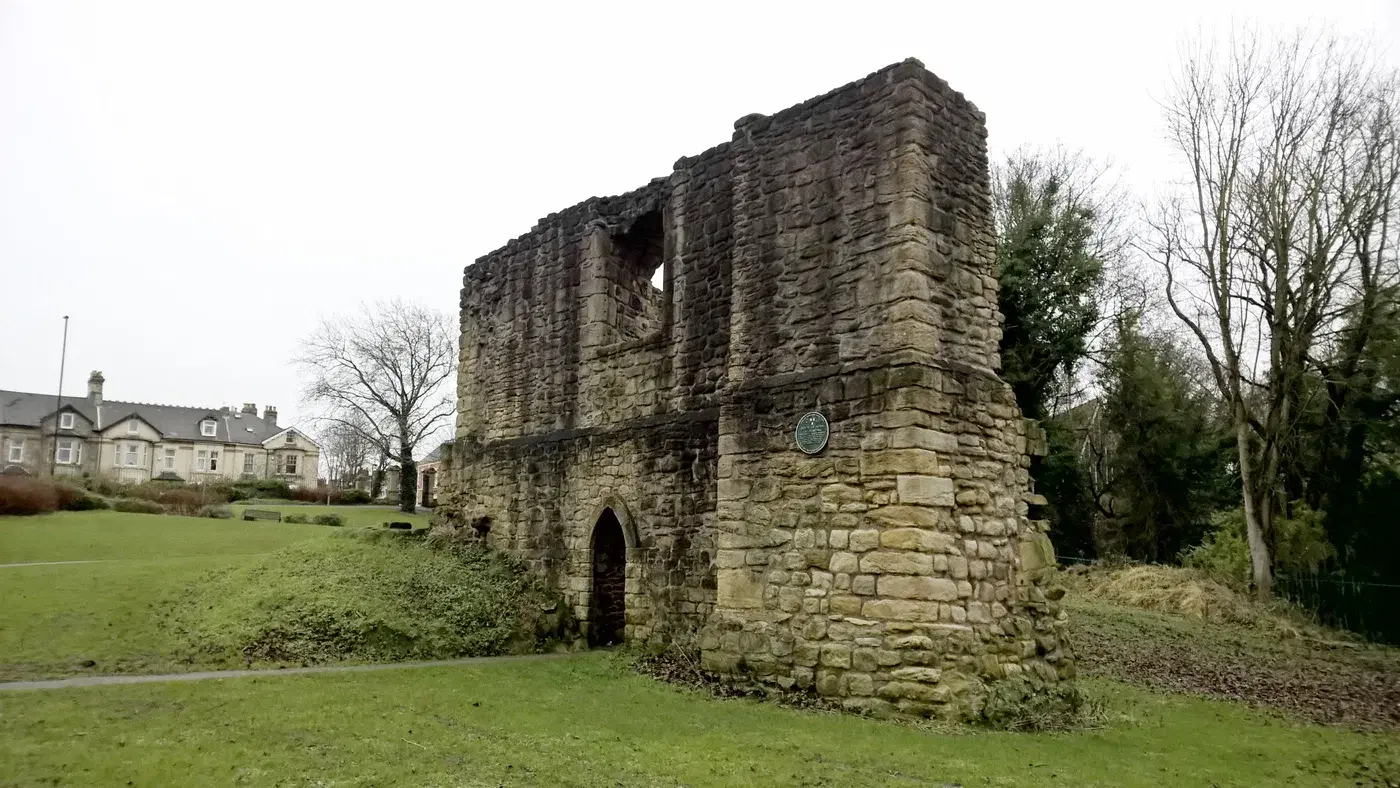
If Heaton Hall is entirely gone, its far older neighbour endures. In Heaton Park stand the ruins of a 13th-century fortified manor house, known romantically as King John's Palace but properly the Camera of Adam of Jesmond, who held the manor of Heaton in the mid-1200s. Pictured above, it had gone out of use by the 17th century and was described as a ruin as early as 1776, yet its walls still stand, the oldest structure in Heaton and a genuine medieval survivor in the middle of a Victorian park.
Best for: Still standing: unlike the rest of this list, King John's Palace can still be visited, in Heaton Park.
Heaton Windmill
Heaton once had a windmill, a reminder of a time when this was open country on the edge of Newcastle rather than a built-up suburb. The stump of the windmill, a listed structure, is a rare physical trace of the pre-industrial landscape that the coming of the railways and the great engineering works would sweep away within a couple of generations.
The Scala and the picture palaces
For much of the 20th century, Heaton had its own cinemas. The Scala Electric Theatre opened on Chillingham Road in 1913, a grand picture palace with a tiled entrance, marble staircases to the dress circle and 1,200 seats upholstered in red plush. It ran until 1961, when it closed and was demolished to make way for a supermarket, a fate that befell countless suburban cinemas as television took hold. The nearby Lyric Cinema on Stephenson Road fared better, surviving as the home of the People's Theatre.
Heaton's lost burn
Not every loss is a building. The Ouseburn once had a tributary running through Heaton, long since culverted and buried beneath the streets. Like the hall and the cinemas, it is a reminder of how much the everyday landscape has changed, hidden now beneath the terraces.
Explore Heaton's history
For more of the area's past, see our guide to Heaton in World War Two and the history of Heaton's high street. The tireless Heaton History Group is the definitive source for anyone wanting to dig deeper.
Know a lost Heaton building we should record? Get in touch.
Local businesses mentioned
Never miss what’s on
Join the weekly Heaton.live digest — the best events, news and local tips, straight to your inbox. Free, one email a week.
What's On
Let 'Em Speak, FLINTA Comedy Open Mic
7:30pm · The Cumberland Arms, James Place Street, Ouseburn, NE6 1LD
King No-One
7:30 PM · The Cluny, 36 Lime Street, Ouseburn, Newcastle upon Tyne, NE1 2PQ
L.A.D.S: Ladies Open Decks and Social
5:30 PM · Cobalt Studios, 10-16 Boyd Street, Ouseburn, Newcastle upon Tyne NE2 1AP