Heaton in World War Two: The Night the Bombs Rained
Heaton was on the front line of the Newcastle Blitz. The story of the suburb in the Second World War, from the terrible raid of April 1941 to the turbine works that armed the war.
For all that Heaton looks like a quiet residential suburb today, in the Second World War it was on the front line. Its railways, its great turbine works and its position beside Newcastle's industrial East End made it a target, and the war left scars that older residents remembered for the rest of their lives. This is the story of Heaton at war.
A target in the East End
Heaton's misfortune was its usefulness. The main east-coast railway lines ran through it, the Tyneside shipyards lay just downriver, and in its midst stood one of the most important engineering works in the country. To German bombers seeking to cripple British industry and transport, this corner of Newcastle was exactly the sort of place they were sent to hit, and Heaton suffered accordingly through the raids of the Newcastle Blitz.
The night of 25-26 April 1941
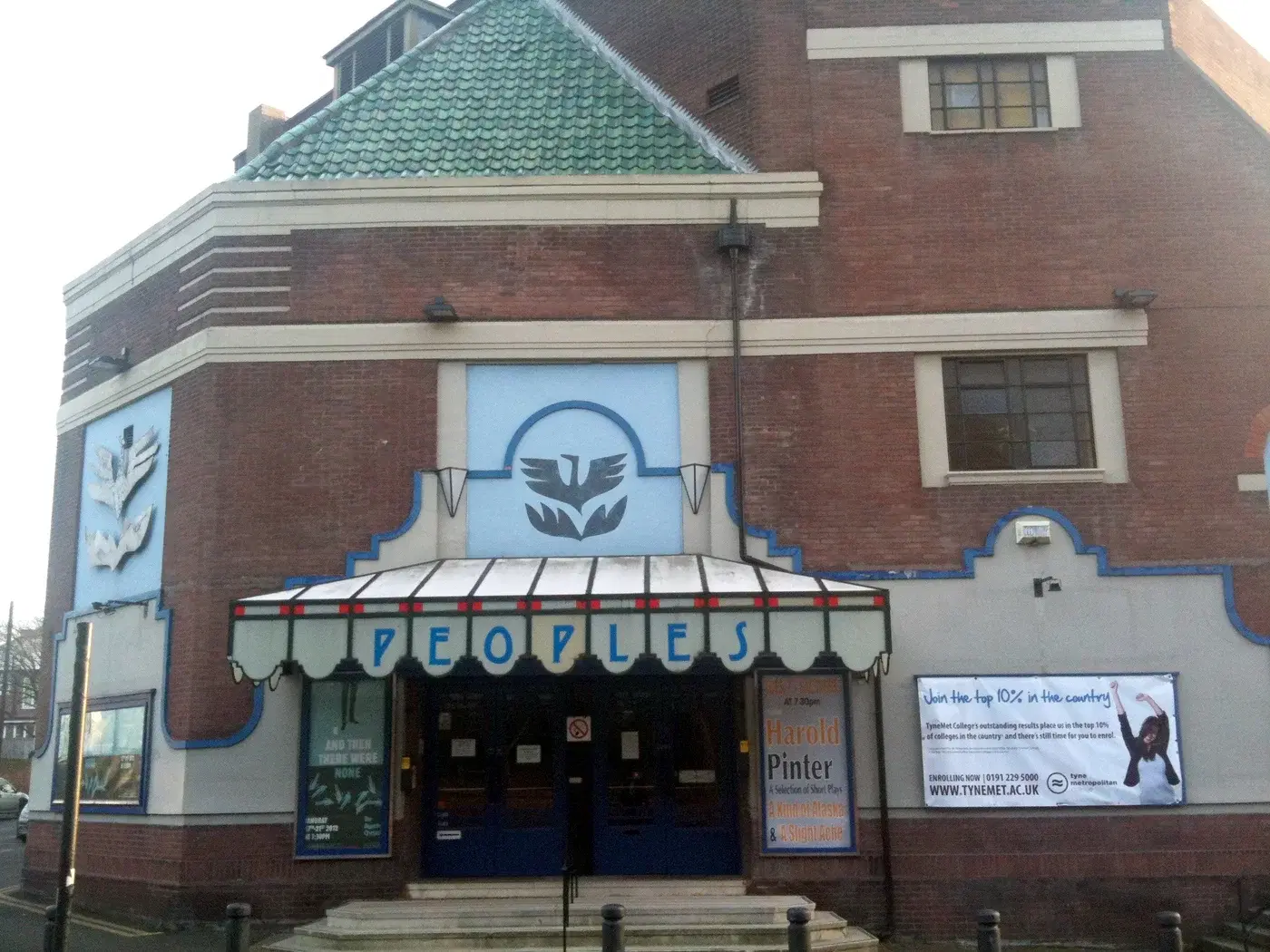
The worst came in the spring of 1941. On the night of 25-26 April, one of Newcastle's most devastating of the whole war, a parachute mine and high-explosive bombs fell on Heaton, destroying homes and killing 47 people. Incendiary bombs rained around the Heaton Secondary Schools in High Heaton and damaged houses on Stephenson Road, Horsley Road and Weldon Crescent. Among the buildings hit was the Lyric Cinema on Stephenson Road, which survives today as the People's Theatre, pictured above.
Best for: The People's Theatre building, the former Lyric Cinema, was among the Heaton buildings damaged in the raids.
Parsons and the war effort
At the heart of industrial Heaton stood the Heaton Works of C. A. Parsons, built in 1889 to manufacture the steam turbines that Sir Charles Parsons had pioneered. By the war the works spread across some 25 acres and employed around 1,800 people, turning out turbines and electrical plant vital to ships, power stations and the war economy. It was exactly this kind of concentrated industry that drew the bombers, and that made the work of Heaton's factory hands as much a part of the war effort as any soldier's.
The home front
Like every British suburb, Heaton lived the war on the home front, with the blackout, rationing, air-raid shelters and the constant labour of the railways and factories. Nearby, the Victoria Tunnel, a 19th-century waggonway beneath the city, was pressed into service as an air-raid shelter for thousands. Ordinary streets organised their wardens, their fire-watching and their mutual support through nights that could turn catastrophic without warning.
Remembering
The events of April 1941 are remembered in local history and in the work of the Heaton History Group, whose book The Night Bombs Rained on Heaton reconstructs that terrible night. For more of the area's past, see our guides to the lost buildings of Heaton and the history of Heaton's high street.
Have family memories or records of Heaton in wartime? Get in touch.
Never miss what’s on
Join the weekly Heaton.live digest — the best events, news and local tips, straight to your inbox. Free, one email a week.
What's On
Let 'Em Speak, FLINTA Comedy Open Mic
7:30pm · The Cumberland Arms, James Place Street, Ouseburn, NE6 1LD
King No-One
7:30 PM · The Cluny, 36 Lime Street, Ouseburn, Newcastle upon Tyne, NE1 2PQ
L.A.D.S: Ladies Open Decks and Social
5:30 PM · Cobalt Studios, 10-16 Boyd Street, Ouseburn, Newcastle upon Tyne NE2 1AP