Living in Heaton: The Complete Guide
Everything you need to know about moving to Heaton and the Ouseburn, the housing, the schools, getting around, green space and the community feel of east Newcastle's most characterful neighbourhood.
If you are weighing up a move to east Newcastle, Heaton makes a strong case. Perched on the hills above the Ouseburn valley, it pairs streets of characterful period housing with an independent high street, a genuine green corridor, and the city's cultural quarter on its doorstep. This guide walks through what living here is actually like, the area and who it suits, the housing, getting around, schools, green space, shopping and eating, and the community feel.
The area, and who it suits
Heaton sits in the NE6 and NE7 postcodes, a couple of miles east of Newcastle city centre and immediately north of the Ouseburn. It runs into a cluster of distinct neighbourhoods, Sandyford towards town, Byker to the east, High Heaton and Jesmond Dene to the north, each with its own character, but all sharing the same easy access to the city and the coast.
The mix of people reflects that. Families are drawn by the schools, the parks and the sense of a walkable neighbourhood; professionals value the quick commute and the food-and-drink scene; and students and younger renters cluster towards Sandyford and the streets closer to the universities. It is a genuinely mixed, sociable part of the city rather than a commuter dormitory or a student enclave, one of the things residents most often mention when they talk about why they stayed.
Housing and streets
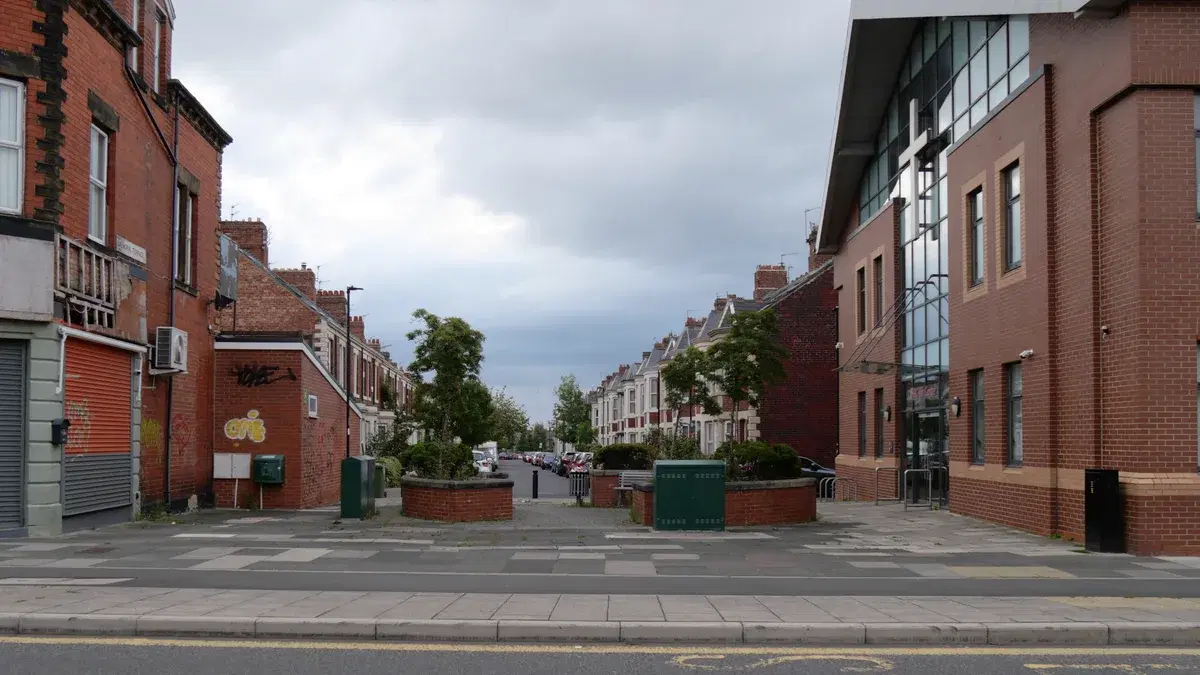
Heaton's housing is overwhelmingly late-Victorian and Edwardian, and much of it is the classic Tyneside flat, a pair of single-storey flats within a two-storey terrace, each with its own front door onto the street. The tell-tale sign is two front doors side by side: one opens straight into the ground-floor flat, the other onto stairs up to the flat above. Most of these were built between roughly 1880 and 1914, when Heaton grew rapidly on the back of Tyneside's industrial boom.
Alongside the flats you will find conventional terraced houses, often on the more generous streets, plus pockets of 1920s and later housing towards High Heaton where crescents were laid out on garden-suburb lines. The upshot is a neighbourhood of period character, bay windows, high ceilings, original details, with a good spread of one- and two-bedroom flats through to larger family terraces. Prices move with the wider market, so it is worth talking to local agents on Chillingham Road and browsing current listings rather than relying on any headline figure.
Getting around
Heaton is well connected. Two Metro stations sit on the Yellow line, Chillingham Road, right on the high street, and Byker just to the south, putting the city centre a few minutes away in one direction and the coast at Tynemouth and Whitley Bay in the other. Frequent buses run along Heaton Road and Shields Road, and the city centre is a walkable distance for the fit and unhurried.
Day to day, though, Heaton rewards walking and cycling. The grid of terraces is flat and permeable, most everyday needs are within a short stroll, and the parks and the Ouseburn give traffic-free routes north and south. Many households here manage happily with one car, or none.
Schools
Newcastle runs a two-tier system across most of the city, first schools (roughly ages 5 to 9), then middle schools (9 to 13), then high schools (13 to 18), rather than the primary-and-secondary split you may be used to elsewhere. It is the single thing families moving from outside the region most often need to get their heads around, because it changes when and where children transfer.
Heaton and the surrounding wards are well served at each tier, with a number of popular schools in and around the area. Admission is driven by catchment and distance, and the most sought-after schools fill up, so it pays to check current catchment maps and Ofsted reports for the specific streets you are considering well before you commit. Our education section pulls together local school information to help you start.
Green space
For a neighbourhood this close to the city centre, Heaton is remarkably green. Heaton Park, a large Victorian park with an 1880 pavilion, play areas and open lawns, runs straight into Armstrong Park and then on into Jesmond Dene, a wooded valley with waterfalls, woodland walks and Pets' Corner that Lord Armstrong gave to the city. Together they form an almost continuous green corridor along the Ouseburn, so you can walk for a couple of miles under trees without really leaving the neighbourhood. Add the allotments off Heaton Road and the riverside paths of the Ouseburn valley below, and everyday access to nature is one of Heaton's quiet advantages.
Shopping and eating
Chillingham Road is the heart of it, one of east Newcastle's most characterful high streets, and a proper working parade rather than a themed one. You will find independent coffee shops, delis and a bookshop alongside butchers, barbers, a wine shop and the everyday shops that make a neighbourhood function, with the Metro running right through the middle. Heaton Road adds more cafés and restaurants a few streets over.
The food scene punches above its weight. Nest, a neighbourhood restaurant on Chillingham Road, has earned a place in the Michelin Guide, and it sits among wood-fired pizza, acclaimed brunch spots and independent burgers. For a pint, The Chillingham is a landmark traditional pub next to the Metro, while the Ouseburn below is a magnet for craft beer, live music and riverside pubs. Browse the full directory to see what is on your future doorstep.
Community feel
What ties it together is an unusually engaged community. Heaton has active residents' groups, a long-running People's Theatre, community allotments and festivals, and a general habit of people looking out for one another. The heritage runs deep too, from the medieval ruins of King John's Palace in Heaton Park to the Ouseburn's industrial past as the cradle of Newcastle's manufacturing, giving the area a real sense of place.
Best for:
New to the area? Start with our what's on calendar and the directory to find your local haunts, then walk the green corridor from Heaton Park up to Jesmond Dene to see the neighbourhood at its best.
Heaton will not suit everyone, if you want new-build convenience or a quiet suburban cul-de-sac, look elsewhere. But if you want period character, a walkable neighbourhood, real green space and a community that shows up, east Newcastle takes some beating.
Never miss what’s on
Join the weekly Heaton.live digest — the best events, news and local tips, straight to your inbox. Free, one email a week.
What's On
Comedy Course Showcase: New Student Showcase 2
7:30 PM · The Cumberland Arms, James Place Street, Ouseburn, Newcastle upon Tyne, NE6 1LD
La Chimera
7:30 PM · Star and Shadow Cinema, Warwick Street, Newcastle upon Tyne, NE2 1BB
Fresh Thursday: Deradoorian + Silver Ley + Mason Lindahl
7:00 PM · Cobalt Studios, 10-16 Boyd Street, Ouseburn, Newcastle upon Tyne, NE2 1AP